All posts
NEC 220.85 permits a duplex to use the lesser of two load calculations: the three-identical-units method under 220.84, or the largest unit times two under the 220.82 optional method. Kopperfield's Load Calculator now runs both calculations on every duplex and cites the code section that governs the total.
A duplex load calculation can be totaled more than one way under the Code, and the two ways don't always agree. Finding the lower number meant running the calculation a second time by hand.
That was one of the most common things electricians asked us for: if the NEC permits a lower duplex total, show it. It's live now.
What does NEC 220.85 allow for a duplex?
For a duplex served by a single service or feeder, the Load Calculator has always used the three-identical-units method: take the larger unit, multiply by three, and apply the multifamily demand factor per NEC 220.84.
NEC 220.85 adds an allowance for two dwelling units. Where the two calculations differ, the lesser of the two loads is permitted. That means checking the 220.84 result against the largest unit times two under the 220.82 single-dwelling optional method. Either one can land lower, depending on the loads involved.
How the Load Calculator shows the 220.85 comparison
Every duplex load calculation now runs both methods. If the alternative comes out lower, an advisory appears under your total with the alternative figure in VA and amps, a Use lesser value button to apply it, and a Revert button to go back. The caption cites the governing code section, so the printed calculation always shows which method produced the number.
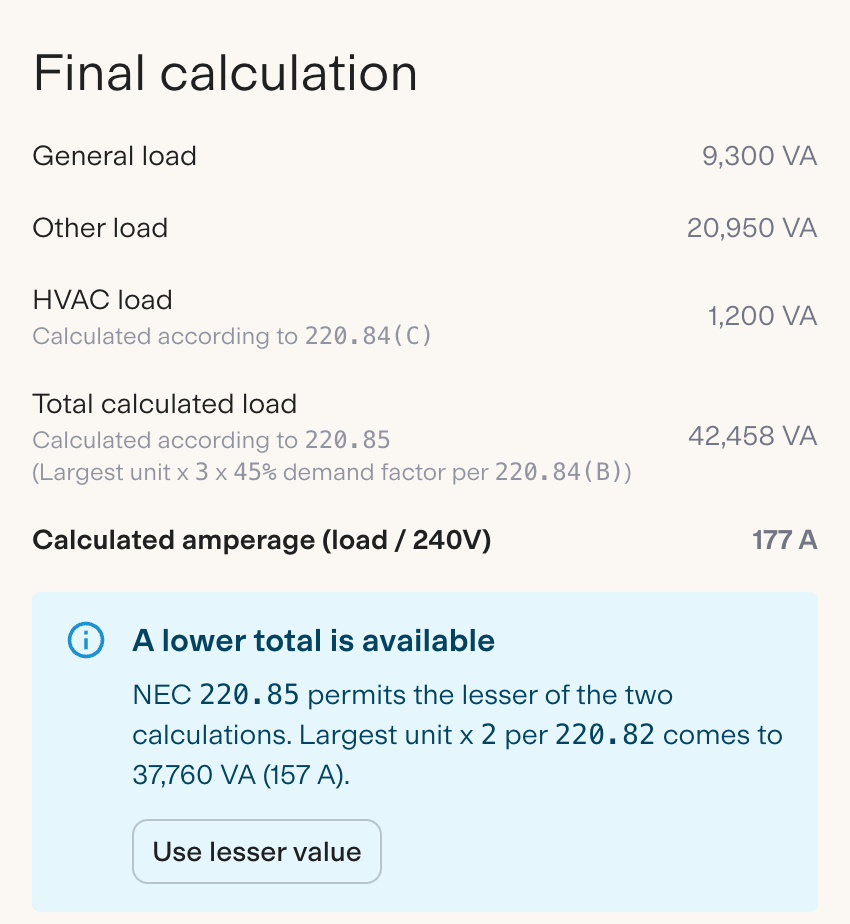
On this duplex, the three-identical-units calculation lands at 177 A while the 220.82 comparison comes to 157 A. The advisory shows the lower figure and leaves the choice to you.
Nothing about your existing duplex load calculations changes unless you pick the lesser value. The comparison is there to tell you it exists, not to make the call for you, and the finalized PDF reflects whichever method you chose.
Working under the 2026 NEC? The calculator cites the renumbered sections, 120.85 and 120.82, based on the NEC edition set for the document.
Why we built it
A few volt-amps can decide whether an existing service passes or the job turns into a service upgrade. When the Code plainly permits the lower number, finding it shouldn't cost you a second pass with a calculator. Now the comparison happens on its own, and the code basis is on the page either way.
Thanks to everyone who asked for this one. If you've got a duplex on the books, open a load calculation, set the dwelling units to Duplex, and see which method governs.
New to Kopperfield? Try the Load Calculator free, duplexes included. Subscribe for unlimited calculations.